Crafting interactions · Designing scalable systems
Giving a growing platform a consistent foundation.
I defined the shared navigation, app templates, and visual language that created consistency across a growing ecosystem of apps.
The challenge
From MVP concept to a scalable platform.
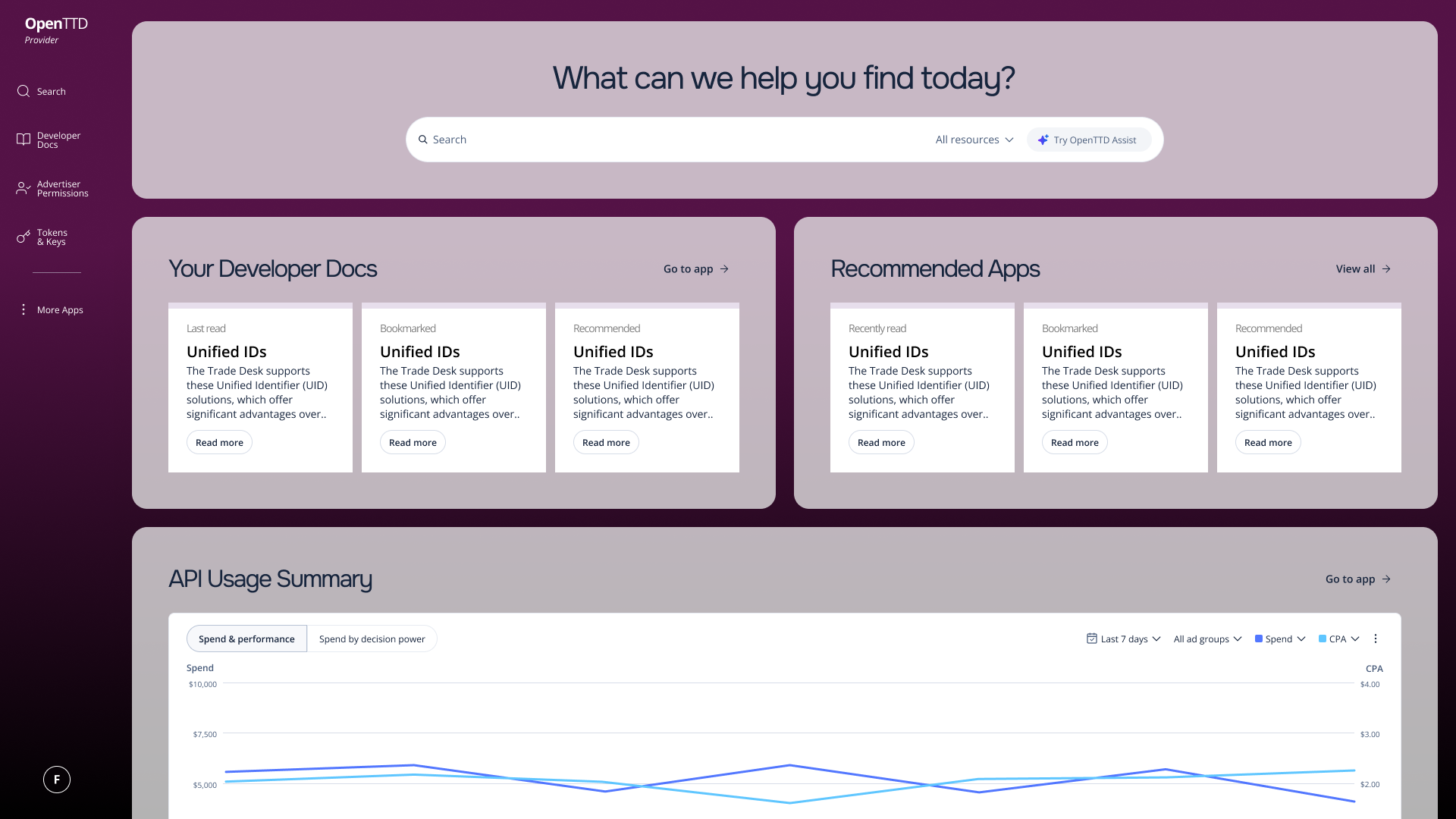
OpenTTD was pitched as a companion to The Trade Desk’s main campaign management platform, supporting non-campaign tasks and developer-centric workflows across three key personas: advertisers, data providers and inventory suppliers.
After validating demand with a set of bare-bones features in an MVP early 2026, the next phase focused on turning the MVP into a scalable platform that could support a growing range of apps and experiences.
My role
As Senior Manager, UX Design, I worked with the Product Director to define the scope and priorities of the UX work, then established an approach for how my team would support the platform as it evolved.
Contribution 01
Defining the UX scope.
The Product Director initially expected UX to support OpenTTD app-by-app as new features were developed. Concerned this would create inconsistencies and design debt as the platform grew, I proposed a one-week intensive to understand the product more holistically — its vision, learnings from the MVP and how it needed to evolve.
Through the intensive, I identified additional UX needs that went beyond individual apps:
Establishing the platform metaphor – OpenTTD was envisioned as a desktop-like environment where users could move between apps while preserving state. The MVP supported this functionally but did little to reinforce the model.
Creating consistency across app experiences – I identified two broad app archetypes — content-heavy and task-based — creating an opportunity for shared templates and interaction patterns.
>Establishing a more cohesive visual language – Moving beyond the MVP required a more polished and consistent visual system that could scale across experiences.
Contribution 02
Establishing a systems-based design process.
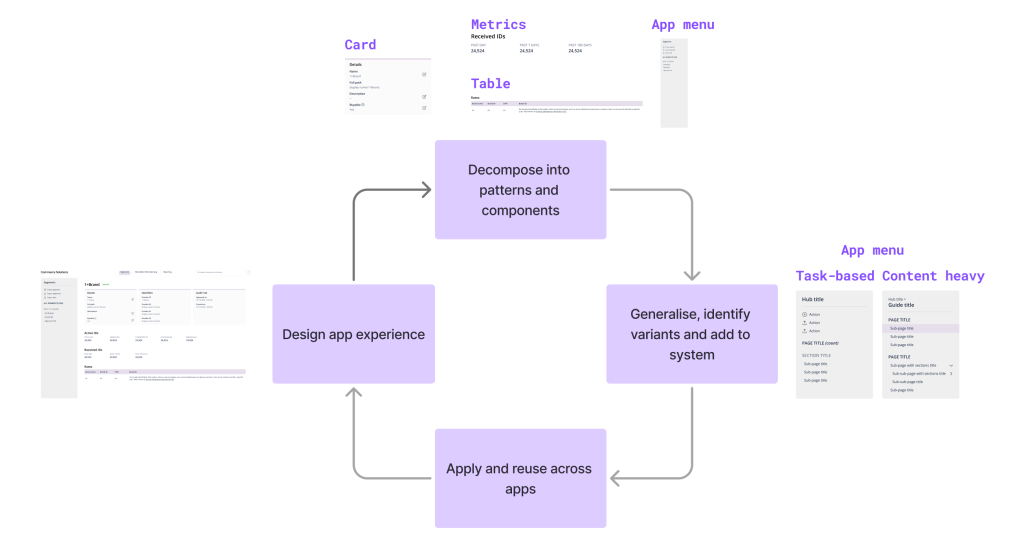
I convinced the Product Director to invest in platform-level UX alongside individual app delivery. Rather than designing each app as a one-off, we established an iterative process where proposed app designs were abstracted into reusable templates, interaction patterns and components, which were then applied back when designing future apps.
This allowed the product and its design system to evolve together, with each new app strengthening the foundations for the next.
Contribution 03
Defining the core platform experience.
With the underlying architecture and design process established, I focused on defining the shared experience that would make individual apps feel like parts of the same platform –establishing the platform shell, navigation model, app templates and visual language.
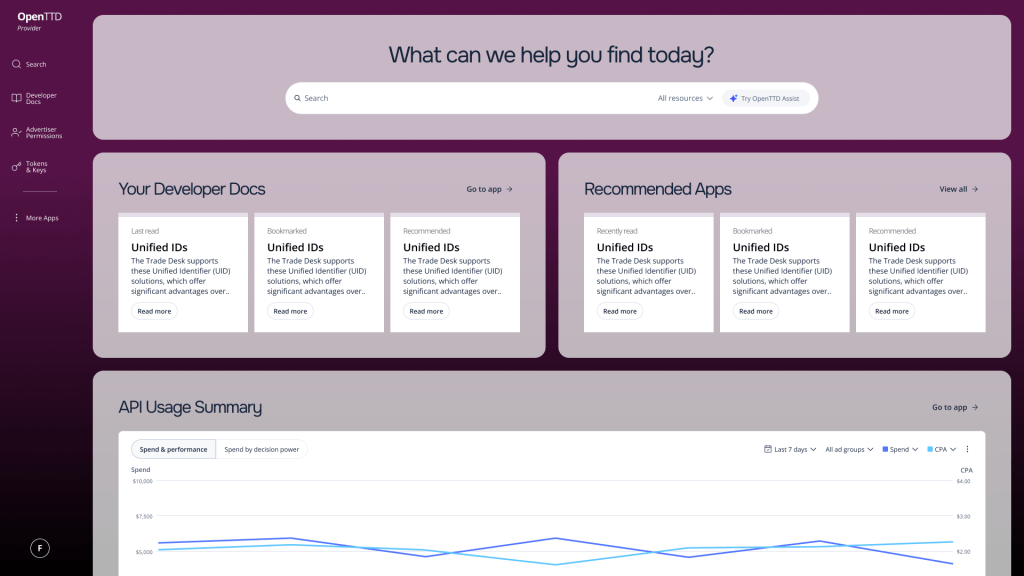
Reinforcing the desktop metaphor.
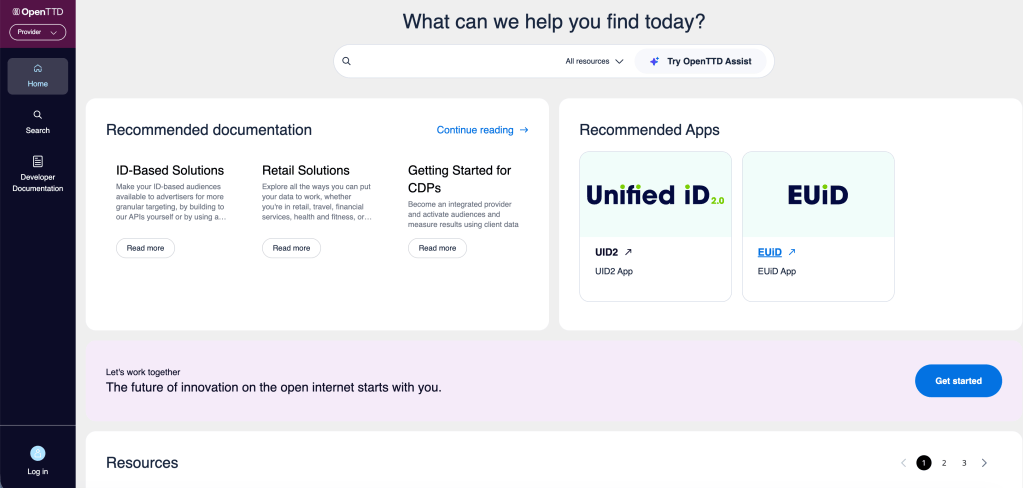
A persistent platform bar allowed users to launch and move between apps, while clearly communicating which apps remained open. Users could pin frequently used apps to the platform bar, adapting the “desktop” to how they worked.
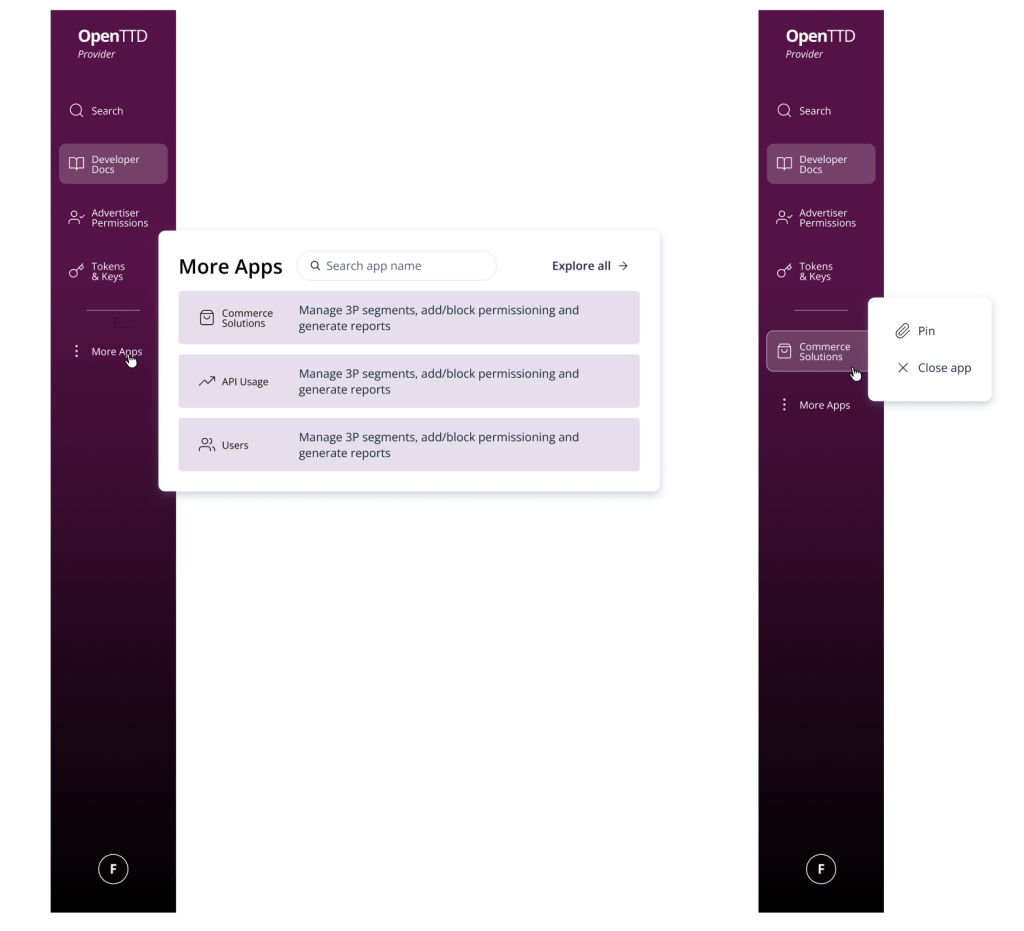
Creating predictable app structures.
A shared app template established consistent locations for app identity, navigation, search and content, allowing users to build familiarity as they moved between apps.
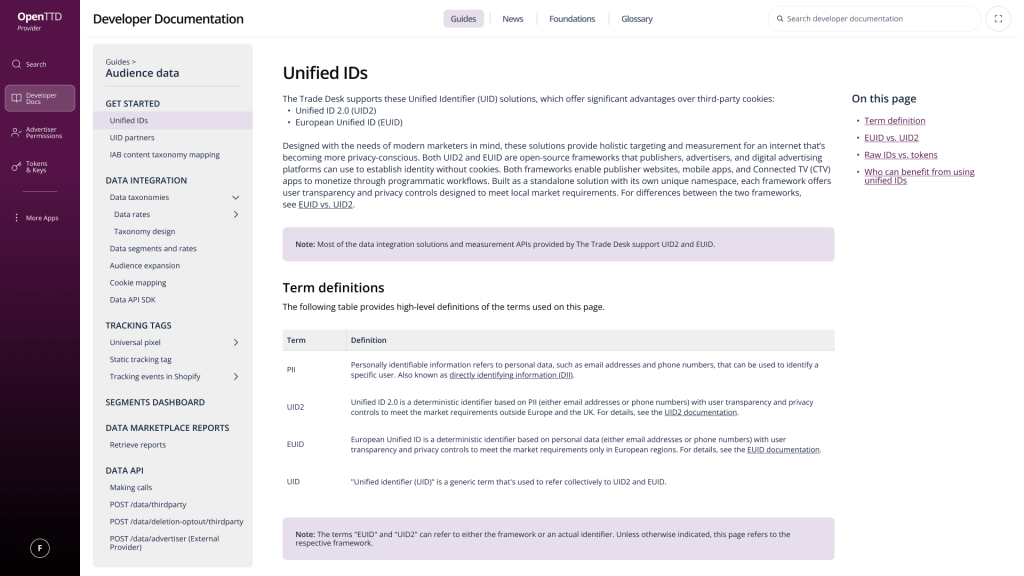
Creating visual consistency across the system.
Shared typography, components and responsive behaviours created consistency across apps, while persona-based theming provided differentiation where useful.
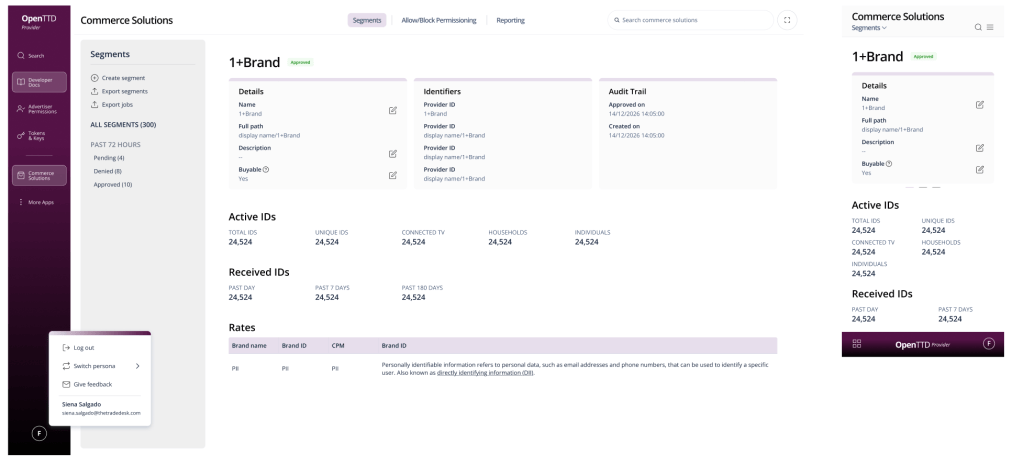
Outcome
Designs delivered on schedule.
Alongside our existing product commitments, my team delivered the UX support needed to evolve OpenTTD beyond its MVP while establishing reusable patterns and components that could support the platform as it continued to grow.

