Shaping product direction
Using research insights to reshape creative roadmap.
I synthesised user research and product telemetry to shift investment from complex troubleshooting features to a refreshed upload experience that prevented errors upstream – contributing to a 40% reduction in workflow time.
The challenge
Grounding creative workflows roadmap planning on user insight.
On The Trade Desk platform, creative workflows cover the process of getting an advertisement (called a ‘creative’) onto the platform and ready to be used in campaigns.
For users, this involves uploading and verifying creatives, assigning them to the appropriate campaign and ad group strategy, and monitoring them once the campaign goes live. If an issue prevents a creative from being used, users also need to quickly identify and resolve the problem.
The product team responsible for creative workflows was heading into an offsite to define the product roadmap for upcoming quarters. Going into the offsite, the team had no shortage of ideas for improving creative workflows. These included new capabilities such as creative sequencing and dynamic creative optimisation alongside more sophisticated troubleshooting workflows for different types of issues
My role
As the UX Manager for the workstream, I was invited to represent UX and bring the end user’s perspective to roadmap planning.
Contribution 01
Building an evidence base for roadmap decisions.
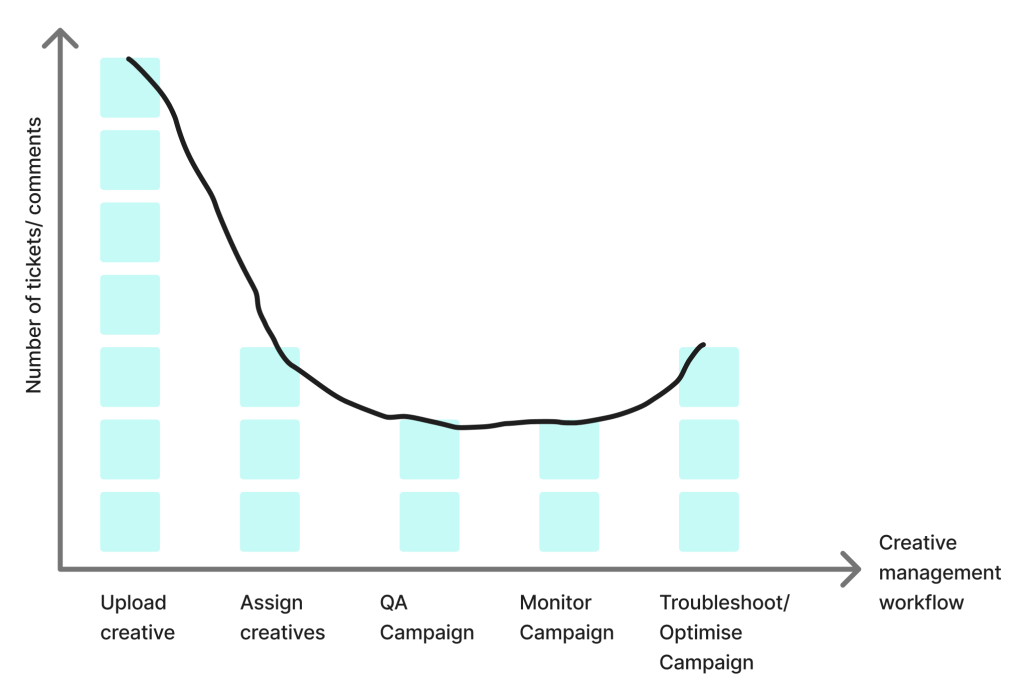
I didn’t want to go to the offsite armed only with opinions and existing assumptions so I got my team to first gather user insights from multiple sources. For quantitative data, we looked at creative-tagged JIRA tickets and analysed event sequences from product telemetry. We paired this with qualitative research across users representing different markets and creative types.
This gave me both breadth and depth into the user experience across the entire creative workflow. More importantly, it gave me an evidence base for discussing where the biggest challenges and opportunities lay.
Contribution 02
Translating research into product insights.
Bringing the quantitative and qualitative research together revealed two important insights that challenged existing product thinking:
Improving the creative upload experience should be prioritised – Our workflow analysis showed that users were most frustrated during creative upload and troubleshooting. More importantly, errors introduced or issues missed during upload often surfaced later as creative issues user had to troubleshoot. This suggested that rather than focusing on better issue detection and more troubleshooting capabilities, improving the upstream experience could have greater impact.
Troubleshooting should be kept simple – Our research showed that there was no incentive for users to become experts in creative management and troubleshooting – their time was better spent on running effective campaigns. Managing creatives was seen as housekeeping work, but with potentially serious consequences when something went wrong. This suggested that troubleshooting needed to demand as little expertise from the user as possible. For issues we couldn’t prevent or detect earlier, we should favour straightforward ways to recover rather than increasingly complex diagnostic tools.
Contribution 03
Using insights to shape product priorities.
I brought these research-backed insights to the offsite as part of a UX led session, using them to advocate for a different approach to creative troubleshooting. The insights ultimately influenced where the team invested:
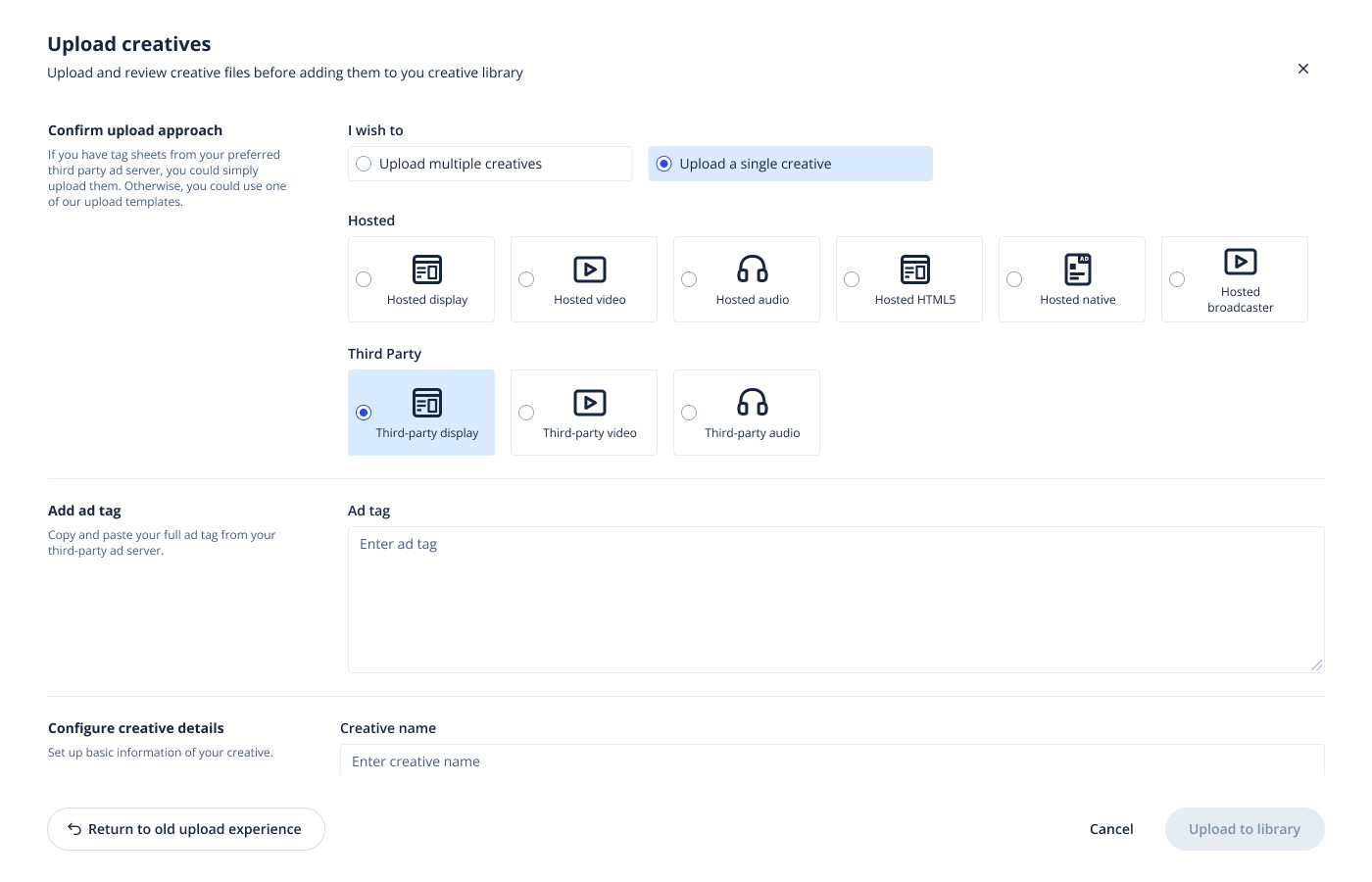
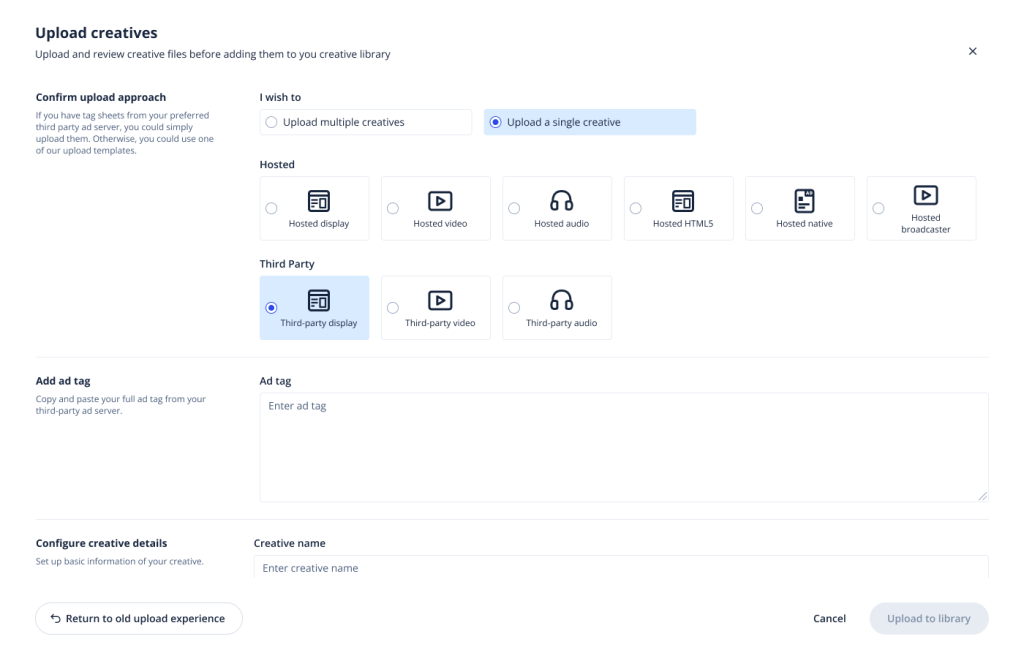
Product prioritised improving the upload experience in the upcoming quarter, with a focus on simplifying the workflow, reducing opportunities for user error, and surfacing creative issues earlier.
Engineering invested in simpler ways to recover from issues, including a “Replace creative” capability. While previously considered difficult and tedious to implement, the user insights helped establish why providing a straightforward escape hatch was worth the investment.
Outcome
40% reduction in time spent on creative workflows.
By 2026, our product owner reported a 40% reduction in the time users spent completing creative workflows, based on product telemetry.
This was further supported by a platform-wide study conducted by a separate engineering team, which found that creative was the only product domain to show a meaningful downward trend in task completion time during this period.
Product and engineering leadership also gave the creative team greater autonomy, reflecting their confidence that we had established a clear product direction grounded in data.

